Ground Chicken Pesto Pasta
Content
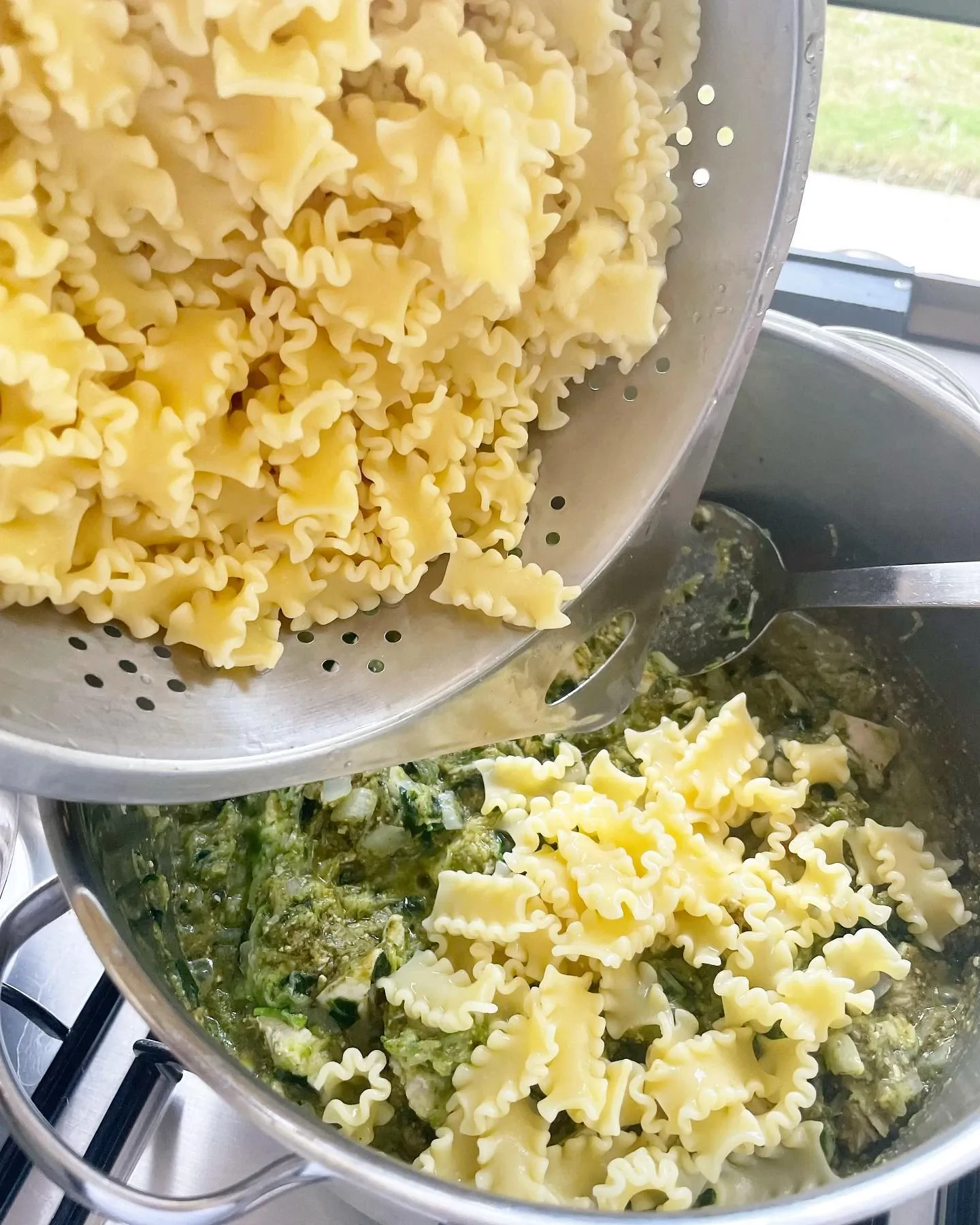
Ground chicken pesto pasta is a quick, comforting pasta dish with a savoury green sauce, tender chicken, soft onion, and mild zucchini / courgette folded through short pasta. The pesto gives the dish a fragrant basil aroma, the ground chicken makes it filling without feeling heavy, and the pasta catches the sauce beautifully, especially if you use a ridged or ruffled shape such as campanelle, fusilli, or farfalle.
This is the kind of weeknight dinner that works well when you want something practical but still full of flavour. The key is to cook the ground chicken properly before adding the pesto, because well-browned chicken gives the sauce a deeper savoury base. I also like using a splash of reserved pasta water, as it loosens the pesto and helps it cling to the pasta instead of sitting heavily at the bottom of the pot.
I have made and adjusted this style of chicken pesto pasta several times at home, and the version I return to uses zucchini for moisture, onion for sweetness, and a little lemon juice at the end to brighten the whole dish. From a practical cooking point of view, the most important detail is not to boil the pesto hard after adding it, because strong heat can dull the fresh basil flavour and make the sauce oily.
Serve this pasta straight from the pan with grated Parmesan-style hard cheese, extra black pepper, and a simple green salad. It is hearty enough for dinner, easy enough for a busy evening, and flexible enough to adapt with spinach, peas, or extra vegetables if you have them on hand.
This is the kind of weeknight dinner that works well when you want something practical but still full of flavour. The key is to cook the ground chicken properly before adding the pesto, because well-browned chicken gives the sauce a deeper savoury base. I also like using a splash of reserved pasta water, as it loosens the pesto and helps it cling to the pasta instead of sitting heavily at the bottom of the pot.
I have made and adjusted this style of chicken pesto pasta several times at home, and the version I return to uses zucchini for moisture, onion for sweetness, and a little lemon juice at the end to brighten the whole dish. From a practical cooking point of view, the most important detail is not to boil the pesto hard after adding it, because strong heat can dull the fresh basil flavour and make the sauce oily.
Serve this pasta straight from the pan with grated Parmesan-style hard cheese, extra black pepper, and a simple green salad. It is hearty enough for dinner, easy enough for a busy evening, and flexible enough to adapt with spinach, peas, or extra vegetables if you have them on hand.
Ingredients
- Short pasta, such as campanelle, fusilli, or farfalle: 350 g / 12 oz.
- Ground chicken: 500 g / 1.1 lb.
- Zucchini / courgette: 300 g / 10.6 oz.
- Yellow onion: 1 medium.
- Garlic cloves: 3.
- Basil pesto: 180 g / 6.3 oz.
- Olive oil: 2 tablespoons.
- Chicken stock or pasta cooking water: 120 ml / 1/2 US cup.
- Parmesan-style hard cheese, finely grated: 40 g / 1.4 oz.
- Lemon juice: 1 tablespoon.
- Salt: 1 teaspoon, plus extra for the pasta water.
- Black pepper: 1/2 teaspoon.
- Reserved pasta cooking water: 120 ml / 1/2 US cup, use as needed.
- Fresh basil or parsley: 2 tablespoons, chopped.
- 1. Prepare the vegetables: Finely chop the onion, mince the garlic, and grate or finely dice the zucchini. If the zucchini seems very watery, press it lightly in a clean kitchen towel so the finished pesto pasta does not become thin or soupy.
- 2. Boil the pasta water: Bring a large pot of water to a strong boil and season it generously with salt. The water should taste lightly seasoned, because this is the first layer of flavour for the pasta.
- 3. Cook the pasta: Add the short pasta and cook until just al dente, following the packet timing as a guide. Stir during the first minute so the pasta does not stick together, then reserve 120 ml / 1/2 US cup of the pasta cooking water before draining.
- 4. Start the chicken base: While the pasta cooks, heat the olive oil in a large deep frying pan or wide pot over medium-high heat. Add the onion and cook for 3–4 minutes, stirring often, until it softens and begins to smell sweet.
- 5. Brown the ground chicken: Add the ground chicken to the pan and break it into small pieces with a spoon or spatula. Cook for 6–8 minutes, stirring regularly, until the chicken is no longer pink and any liquid released from the meat has mostly evaporated.
- 6. Check the chicken carefully: If using a food thermometer, the chicken should reach at least 74°C / 165°F. If you do not have a thermometer, cook until the chicken is fully opaque, crumbly, and lightly golden in spots with no raw-looking pieces remaining.
- 7. Add garlic and zucchini: Stir in the garlic and zucchini, then cook for another 4–5 minutes. The zucchini should soften and release moisture, but the mixture should still look thick rather than watery.
- 8. Season the sauce base: Add the salt and black pepper, then stir well so the seasoning is evenly distributed through the chicken and vegetables. Taste carefully at this stage, remembering that pesto and cheese will add more saltiness later.
- 9. Loosen with stock: Pour in the chicken stock or pasta cooking water and scrape the bottom of the pan to lift any browned bits. Let it bubble gently for 1–2 minutes so the mixture becomes juicy and cohesive.
- 10. Add the pesto gently: Reduce the heat to low, then stir in the basil pesto. Warm it through gently rather than boiling it, because pesto keeps a fresher colour and aroma when it is not cooked too aggressively.
- 11. Combine with pasta: Add the drained pasta to the pan and toss everything together until the pasta is well coated. Add a little reserved pasta cooking water, a few tablespoons at a time, until the sauce looks glossy and clings to the pasta.
- 12. Finish the flavour: Stir in the grated Parmesan-style hard cheese and lemon juice. The cheese should melt into the sauce, while the lemon should lift the pesto and balance the richness.
- 13. Rest briefly before serving: Turn off the heat and let the pasta stand for 2 minutes. This short rest helps the sauce settle around the pasta and gives the final dish a creamier texture without adding cream.
- 14. Serve hot: Spoon the ground chicken pesto pasta into bowls and finish with chopped basil or parsley, extra grated cheese, and black pepper if liked. Serve immediately while the pasta is glossy, warm, and well coated.
Recipe Directions
FAQ
Frequently Asked Questions
▶ Can I use another type of pasta for ground chicken pesto pasta?
Yes. Short pasta works best because it catches the ground chicken and pesto sauce. Fusilli, penne, farfalle, rigatoni, and campanelle are all good choices. Long pasta can be used, but the meat sauce will not cling quite as evenly.
▶ Why did my pesto sauce turn oily?
Pesto can split if it is boiled too hard or heated for too long. Reduce the heat before adding it, stir it through gently, and use reserved pasta water to loosen the sauce. This helps the pesto coat the pasta instead of separating.
▶ Can I make this pasta with turkey instead of chicken?
Yes. Ground turkey works well and can be cooked in the same way. Make sure it is fully cooked and reaches at least 74°C / 165°F if checked with a food thermometer. Turkey is often lean, so a small extra splash of pasta water may help keep the sauce moist.
▶ What can I add if I want more vegetables?
Baby spinach, peas, broccoli florets, mushrooms, or roasted peppers all work nicely. Add quick-cooking vegetables near the end so they stay fresh, and cook firmer vegetables before adding the pesto so the sauce does not become watery.
▶ Can ground chicken pesto pasta be made ahead?
It can be made ahead, although pesto pasta is at its best when freshly tossed. For meal prep, slightly undercook the pasta, cool the finished dish quickly, and store it in an airtight container in the refrigerator. Add a splash of water before reheating to bring back the sauce.
▶ How should I reheat leftovers without drying them out?
Reheat leftovers gently in a pan over low heat with a splash of water or stock, stirring until hot throughout. If reheating in the oven, cover the dish and warm at 160°C / 320°F until piping hot. Avoid high heat, as it can make the chicken dry and the pesto oily.
▶ Can I freeze this pesto pasta?
Freezing is possible, but the texture of the pasta and pesto may soften after thawing. For best results, freeze the chicken pesto sauce separately and cook fresh pasta when serving. If freezing the complete dish, thaw it in the refrigerator and reheat gently with a little extra liquid.
global.recipe.nutrition
Nutrition information per 100 g of prepared dish
*Values are approximate. Nutritional values may vary depending on the ingredients used, their fat content, exact quantities, brands, and preparation method.
188
Calories (kcal)
11 g
Protein
8 g
Fat
19 g
Carbohydrates
2 g
Sugars
0.65 g
Salt

Markas Kriaučiūnas
Recipe Author
I am a food technologist, and to me, food is an adventure. I enjoy unique ingredient combinations, seasonal dishes, and desserts. I almost never cook the same dish twice, but I always choose healthy and delicious food.
I graduated from the Liutauras Čeprackas Culinary Academy and also attended the culinary studio of Gian Luca Demarco (an Italian chef). Additionally, I worked at the River Town restaurant in Vilnius for 5 years. Now, I try to share all of this experience with my readers on worldrecipes.eu