
Protein balls with dates and peanut butter
Content
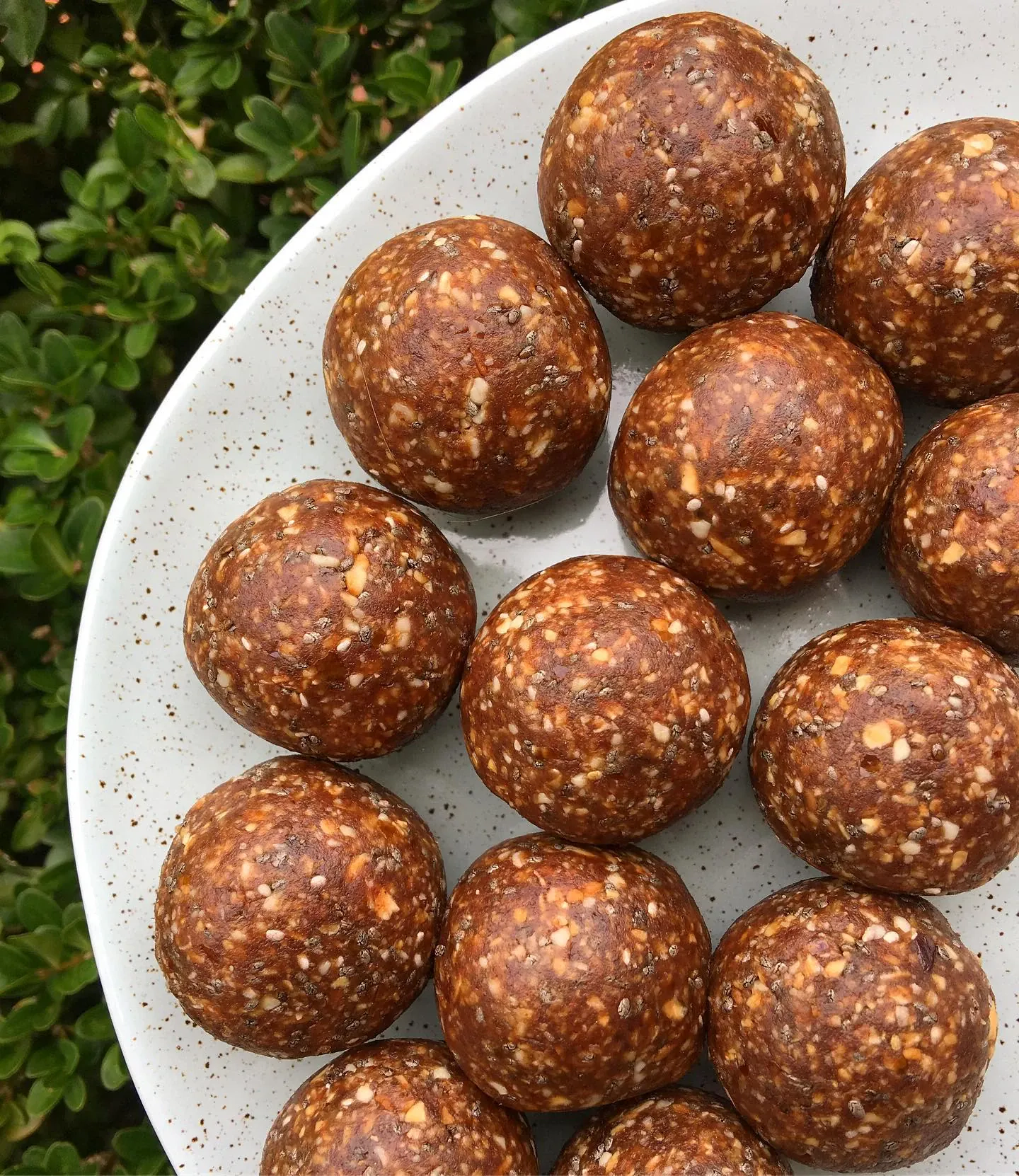
These protein balls with dates and peanut butter are chewy, nutty, naturally sweet and full of deep chocolate flavour from cacao powder. They are made without baking, so the texture comes from blending oats, cashews, Medjool dates, peanut butter, chia seeds and flaxseed meal into a sticky mixture that can be rolled into neat little energy balls. The result is a practical homemade snack that feels satisfying without being heavy.
I like keeping a box of these in the fridge because they are useful on busy mornings, after exercise, with coffee, or whenever I want something sweet but still made from simple ingredients. I have made this kind of no-bake snack many times, and the detail that matters most is the texture of the mixture. It should look slightly crumbly at first, then come together when pressed between your fingers.
Medjool dates are especially good here because they are soft, caramel-like and naturally sticky. Smooth peanut butter adds richness, while cashews give the balls a creamy nut flavour. Chia seeds and flaxseed meal help bind the mixture and add a pleasant, slightly speckled texture. If your dates are drier than expected, a small extra drizzle of maple syrup or a teaspoon of water helps the mixture bind without making it too wet.
These chocolate peanut butter energy balls are also easy to adapt. You can make them smaller for a quick bite, larger for a more filling snack, or chill them longer for a firmer texture. They keep well, travel neatly in a small container, and are a good recipe to prepare ahead when you want a homemade snack ready for the week.
I like keeping a box of these in the fridge because they are useful on busy mornings, after exercise, with coffee, or whenever I want something sweet but still made from simple ingredients. I have made this kind of no-bake snack many times, and the detail that matters most is the texture of the mixture. It should look slightly crumbly at first, then come together when pressed between your fingers.
Medjool dates are especially good here because they are soft, caramel-like and naturally sticky. Smooth peanut butter adds richness, while cashews give the balls a creamy nut flavour. Chia seeds and flaxseed meal help bind the mixture and add a pleasant, slightly speckled texture. If your dates are drier than expected, a small extra drizzle of maple syrup or a teaspoon of water helps the mixture bind without making it too wet.
These chocolate peanut butter energy balls are also easy to adapt. You can make them smaller for a quick bite, larger for a more filling snack, or chill them longer for a firmer texture. They keep well, travel neatly in a small container, and are a good recipe to prepare ahead when you want a homemade snack ready for the week.
Ingredients
- Rolled oats: 45 g / 1/2 US cup.
- Cashews: 70 g / 1/2 US cup.
- Smooth peanut butter: 40 g / 2 heaped tablespoons.
- Cacao powder: 8 g / 1 heaped tablespoon.
- Medjool dates: 5 large.
- Chia seeds: 1 tablespoon.
- Flaxseed meal: 1 tablespoon.
- Maple syrup: 15 ml / 1 tablespoon.
- Fine salt: 1 small pinch.
12 protein balls:
- 1. Check the dates: Remove the stones from the Medjool dates and feel their texture before blending. They should be soft, sticky and easy to tear apart with your fingers. If they feel firm or dry, soak them in hot water for 5 minutes, then drain them very well before using.
- 2. Prepare the dry base: Add the rolled oats and cashews to a food processor or powerful blender. Pulse until the mixture looks like coarse crumbs with a few small nutty pieces still visible. Do not blend until completely floury, because a little texture makes the protein balls more pleasant to eat.
- 3. Add the binding ingredients: Add the smooth peanut butter, cacao powder, pitted dates, chia seeds, flaxseed meal, maple syrup and fine salt. Blend in short bursts, scraping down the sides as needed, until the dates break down and the mixture begins to clump together.
- 4. Test the texture: Pinch a small amount of the mixture between your fingers. It should hold together easily without feeling wet or oily. If it crumbles apart, add 1 teaspoon of maple syrup or water and blend again briefly. If it feels too soft, add 1 tablespoon of rolled oats and pulse until balanced.
- 5. Avoid over-blending: Stop blending as soon as the mixture binds. Overworking it can release too much oil from the cashews and peanut butter, which may make the balls greasy rather than pleasantly chewy.
- 6. Shape the protein balls: Scoop out small portions of the mixture and roll them firmly between your palms. Aim for about 12 even balls. Press the mixture together first, then roll, as this helps the surface become smooth and prevents the balls from cracking.
- 7. Chill before serving: Place the protein balls on a plate or in a lidded container and chill them in the fridge for at least 30 minutes. Chilling firms the peanut butter and helps the oats, chia seeds and flaxseed absorb moisture, giving the balls a better texture.
- 8. Store properly: Keep the protein balls in an airtight container in the fridge. For the best texture, let them sit at room temperature for 2–3 minutes before eating if they have been chilled for several hours.
- 9. Serve and use: Enjoy them as a quick snack, a post-workout bite, a lunchbox treat, or a sweet nibble with coffee. They are rich, so one or two balls are usually enough for a satisfying portion.
Recipe Directions
FAQ
Frequently Asked Questions
▶ Why are my protein balls not sticking together?
The most common reason is that the dates are too dry or the mixture has not been blended long enough. Use soft Medjool dates and blend until the mixture clumps when pressed. If it still feels crumbly, add 1 teaspoon of maple syrup or water and blend again briefly.
▶ Can I make these protein balls without peanut butter?
Yes. Almond butter, cashew butter or sunflower seed butter can be used instead. The flavour will change slightly, but the texture should remain similar as long as the spread is smooth and not too dry.
▶ Can I use cocoa powder instead of cacao powder?
Yes. Unsweetened cocoa powder works well as a substitute for cacao powder. Cacao usually has a slightly deeper and more earthy flavour, while cocoa powder may taste a little smoother and milder.
▶ How long do these date and peanut butter protein balls keep?
They keep well in an airtight container in the fridge for up to 1 week. The texture becomes firmer after chilling, and the flavour often tastes more rounded after a few hours.
▶ Can I freeze protein balls?
Yes. Freeze them in a sealed container with baking paper between layers for up to 2 months. Thaw them in the fridge or leave one at room temperature for about 10–15 minutes before eating.
▶ What can I do if the mixture becomes too sticky?
Add a little more rolled oats, 1 tablespoon at a time, and pulse briefly until the mixture is easier to handle. You can also chill the mixture for 10 minutes before rolling, which makes it less tacky and easier to shape.
global.recipe.nutrition
Nutrition information per 100 g of prepared dish
*Values are approximate. Nutritional values may vary depending on the ingredients used, their fat content, exact quantities, brands, and preparation method.
405
Calories (kcal)
11 g
Protein
20 g
Fat
45 g
Carbohydrates
25 g
Sugars
0.2 g
Salt

Markas Kriaučiūnas
Recipe Author
I am a food technologist, and to me, food is an adventure. I enjoy unique ingredient combinations, seasonal dishes, and desserts. I almost never cook the same dish twice, but I always choose healthy and delicious food.
I graduated from the Liutauras Čeprackas Culinary Academy and also attended the culinary studio of Gian Luca Demarco (an Italian chef). Additionally, I worked at the River Town restaurant in Vilnius for 5 years. Now, I try to share all of this experience with my readers on worldrecipes.eu